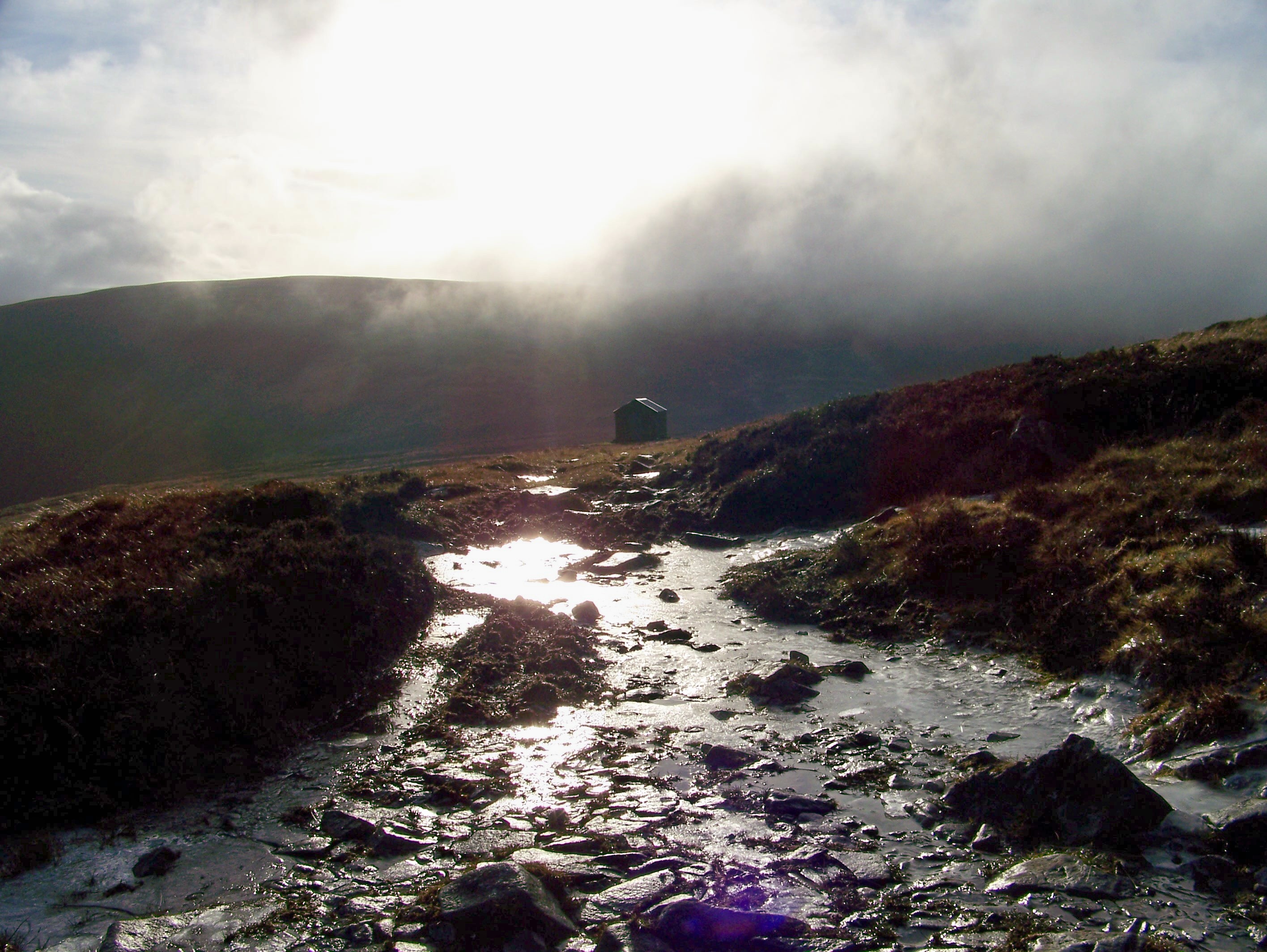
Lingy Hut, above Grainsgill Beck, a useful place for brew or to spend the night
TWO chaps from an ICI depot near Kendal used to deliver explosives to a limestone quarry where I worked as a rock driller. They’d park their wagon in the quarry bottom, have a quick smoke, then I’d give them a hand chucking Iregel, Anfo and Opencast Gelignite into the quarry magazine. I would look forward to their visits. When you’re stuck on a well-boring rig on the top of a quarry, week in and week out, with no one to talk to but yourself and a growing band of imaginary friends, the arrival of two blokes and a tonne of explosives is the equivalent of the circus coming to town.
So we’d unload the gear. And when we’d finished there would usually be a few boxes left in the wagon – black powder for the slate quarries up in the fells and a few packs of gelignite for Carrock Mine. Carrock was on borrowed time in those days. The veins were getting thin, the ICI fellas used to say.
One day, when we’d finished unloading the explosives, there was only black powder left in the wagon. Black powder for the fell quarries. Nothing else.
“Nowt for Carrock?” I asked.
The fellas shook their heads.
“Nowt for Carrock.”
That was the end. Autumn 1981. And now I stand on the deeply-rutted tarmac road that shoots up the side of Carrock Fell to the place where the mine buildings used to stand.
Carrock was Lakeland’s only wolfram and scheelite mine – the minerals being the principal ores of tungsten. Galena, the ore of lead, was also mined here. 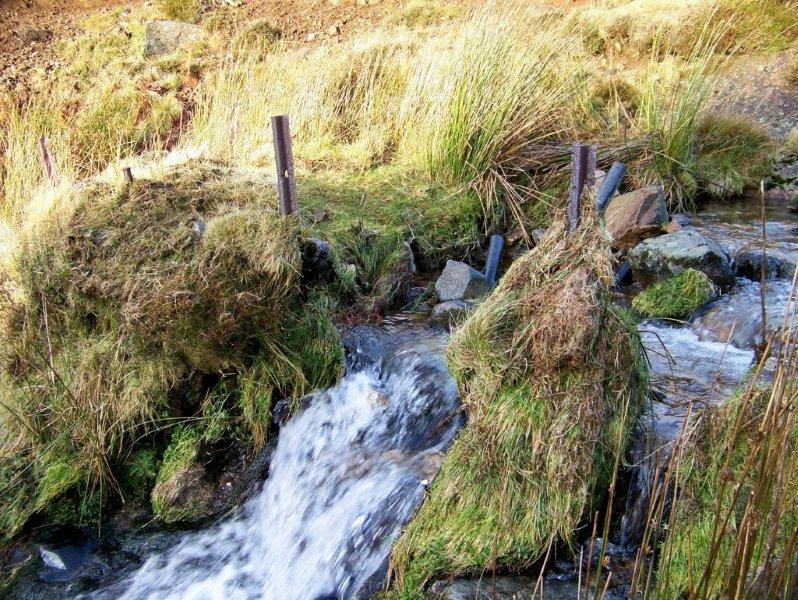 Carrock was a large operation, dating from the 1850s. Like all Lakeland mines, prosperity came in peaks and troughs. But mainly troughs.
Things took off in a big way in the early 1900s. But in 1919, after the First World War ended, the price of wolfram collapsed and the mine fell into a period of disuse.
The fall of Burma – a source of tungsten – in 1942 brought another period of prosperity. The Ministry of Supply commandeered the workings and employed a company of Canadian Army engineers, who were later replaced by local miners, Spaniards who had fled Franco’s brutal fascist regime, and Italian PoWs. The mine flourished until the Nazi threat diminished, when it sank once more into inactivity – thus reinforcing the Billy Bragg lyrics:
“War. What is it good for? It’s good for business.”
Not that they need reinforcing. But if further proof is needed, the outbreak of the Korean War – Korea also being a source of tungsten – in the 1950s heralded another period of interest in Carrock. But moves to reopen the workings were opposed by various conservation groups, and by the time the wrangle was sorted the price of tungsten had fallen – so the mine remained closed.
I’ll pause there just in case that last point slipped by unnoticed like a lady’s fart in a Keswick trinket shop. Here it comes again. Britain was at war and needed resources. Entrepreneurs attempted to reopen a mine. The move was opposed by people who believed that mines had no place in a newly-formed national park.
The British casualties in Korea totalled 710 dead, 2,278 wounded, 1,263 missing in action (which sounds pretty dead to me), and 766 captured. My father, who was an aircraft handler on the carrier HMS Theseus, was out there along with thousands of others fighting a load of blokes they didn’t know from Adam. Meanwhile, on the home front, various organisations with a vested interest in keeping the countryside free of hard-working country folk were thrusting their polished ebony spokes into the wheels of industry. Some people didn’t know there was a war on.
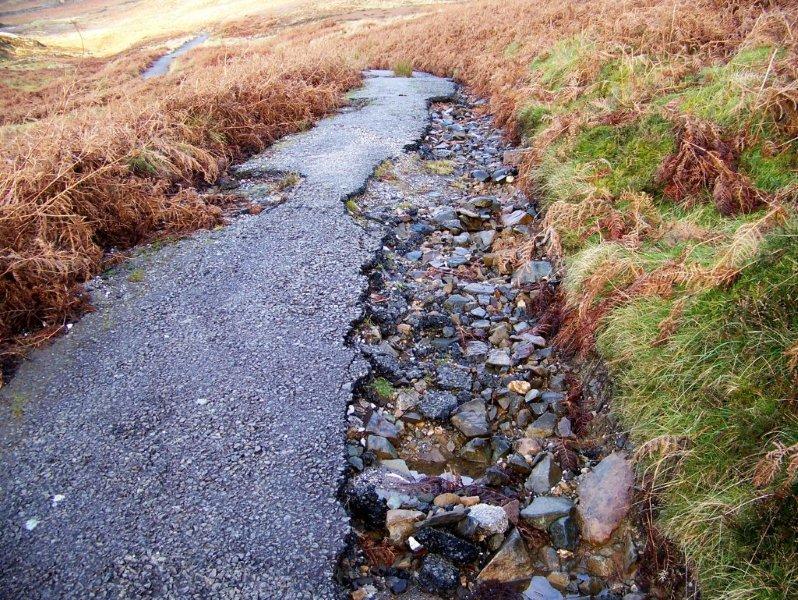
The busted road to Carrock Mine
In a less-challenging world it would be convenient to accept that the Lake District was shaped by Wordsworth, Wainwright and Beatrix Potter. But it wasn’t. It was given its identity by people with spades, picks and grit down their trousers – blokes who smelted iron, sheared sheep, coppiced woodland, produced charcoal, mined the earth, and risked life and limb to work the green slate. Lakeland is a product of its native industries: principally agriculture, quarrying and mining. The towns and villages evolved around those industries. The economy was based on those industries. It’s ironic, then, that in the name of conservation and the preservation of a unique environment, one of those industries should get it right in the neck.
Carrock Mine’s final phase came in the late 1970s. But the price of wolfram tumbled and the last 30 miners were laid off in 1981. Big shame that. If they’d held out another few months the Falklands War might have brought a welcome burst of prosperity. It was good for business, apparently.
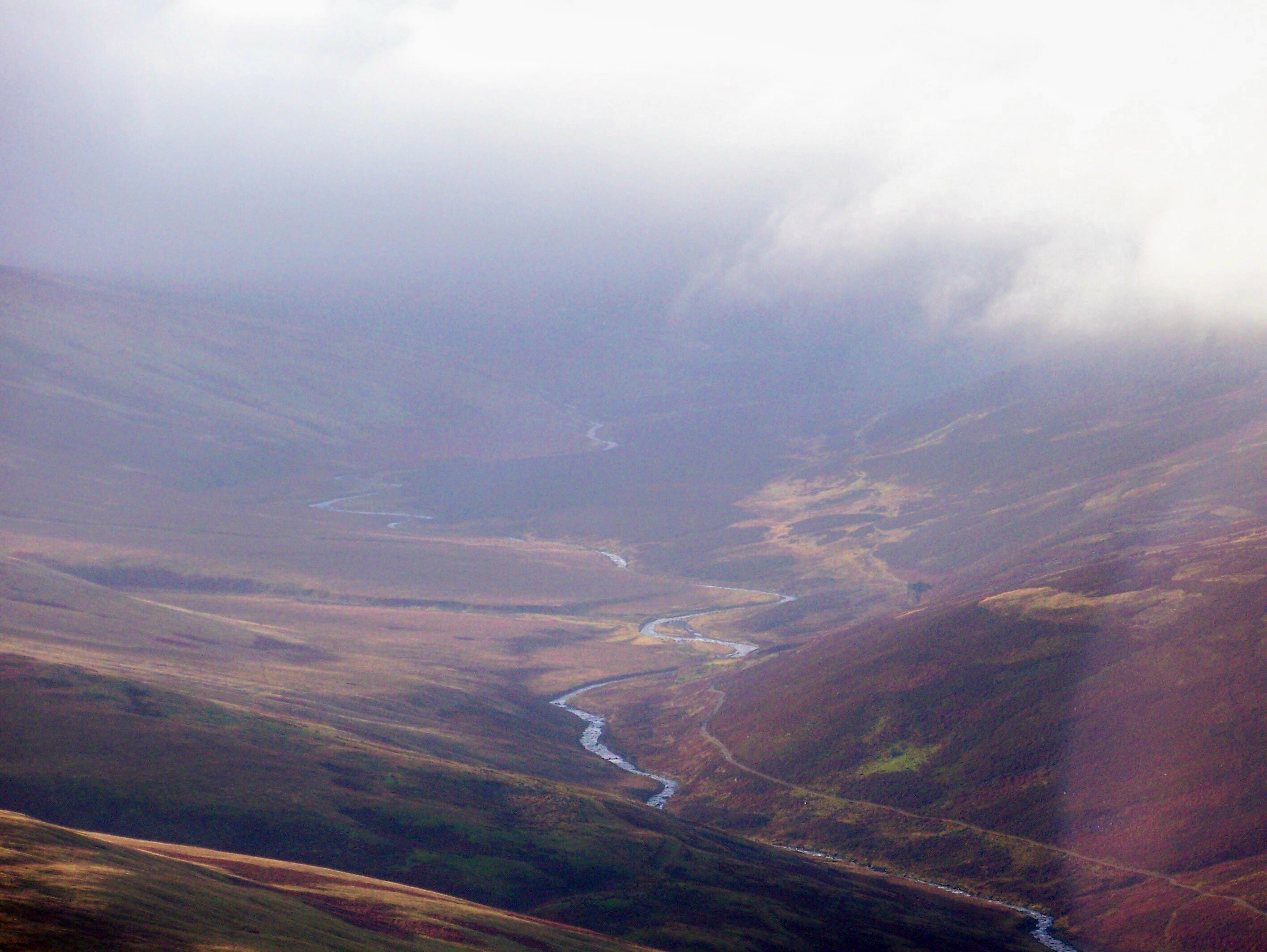
And now there’s nothing left except a few concrete blocks and a busted tarmac road. With a disregard for industrial heritage and history, the authorities had the site landscaped and the workings sealed up. A visitor walking up Grainsgill Beck today might be forgiven for thinking that nothing more interesting than a council gritting depot had occupied this remote and haunting place.
Anyway. Tea break over, back on your heads. I’m here to do a circuit of Carrock Fell, High Pike, Knott and the Calvas before darkness closes in. I’m in a bad mood, which is good from a walking point of view because it means my legs will move faster. Nothing gets my back up more than institutionalised vandalism. But there you go.
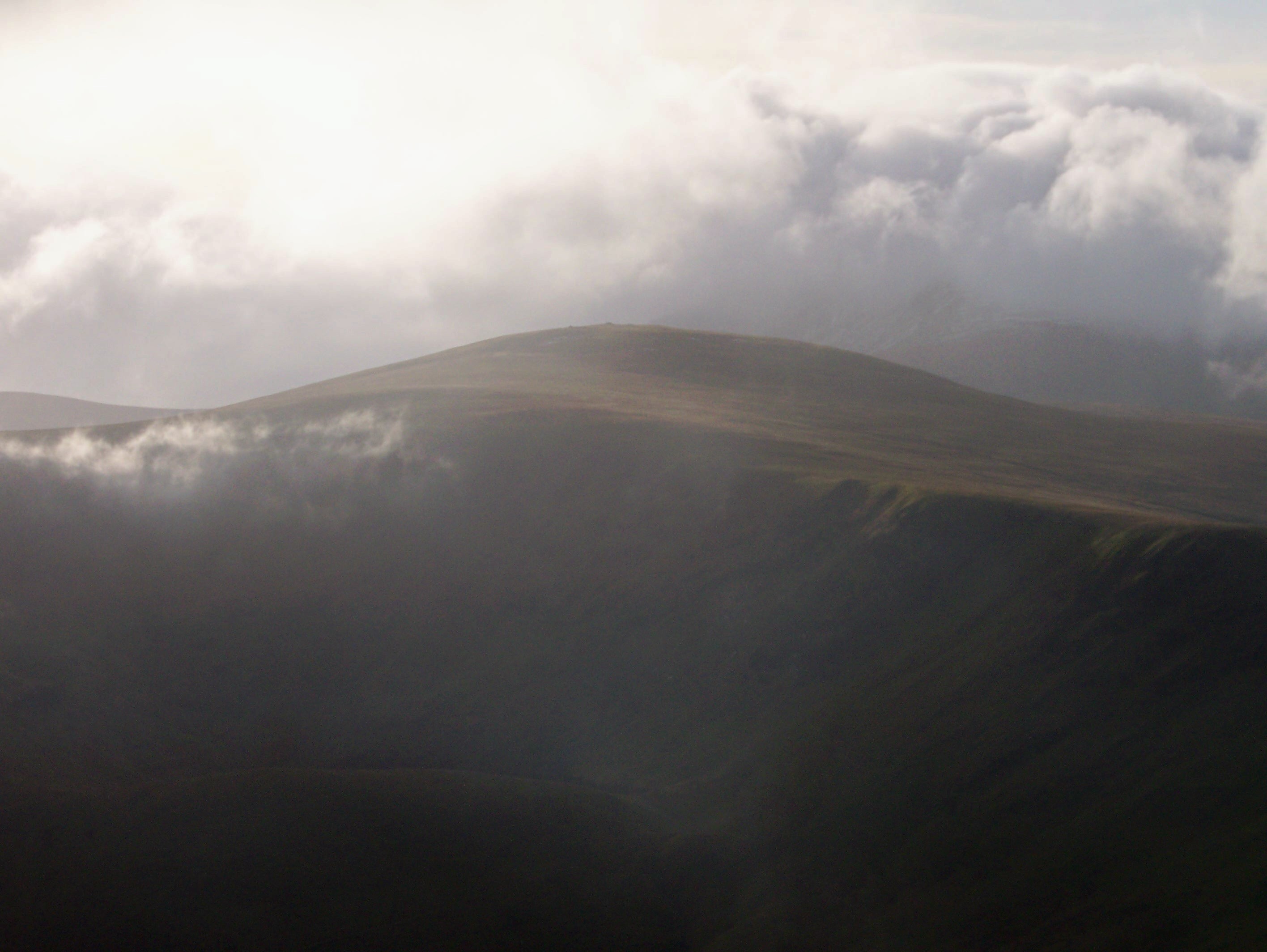
Bowscale Fell from Carrock Fell, with traces of snow on Blencathra to the rear
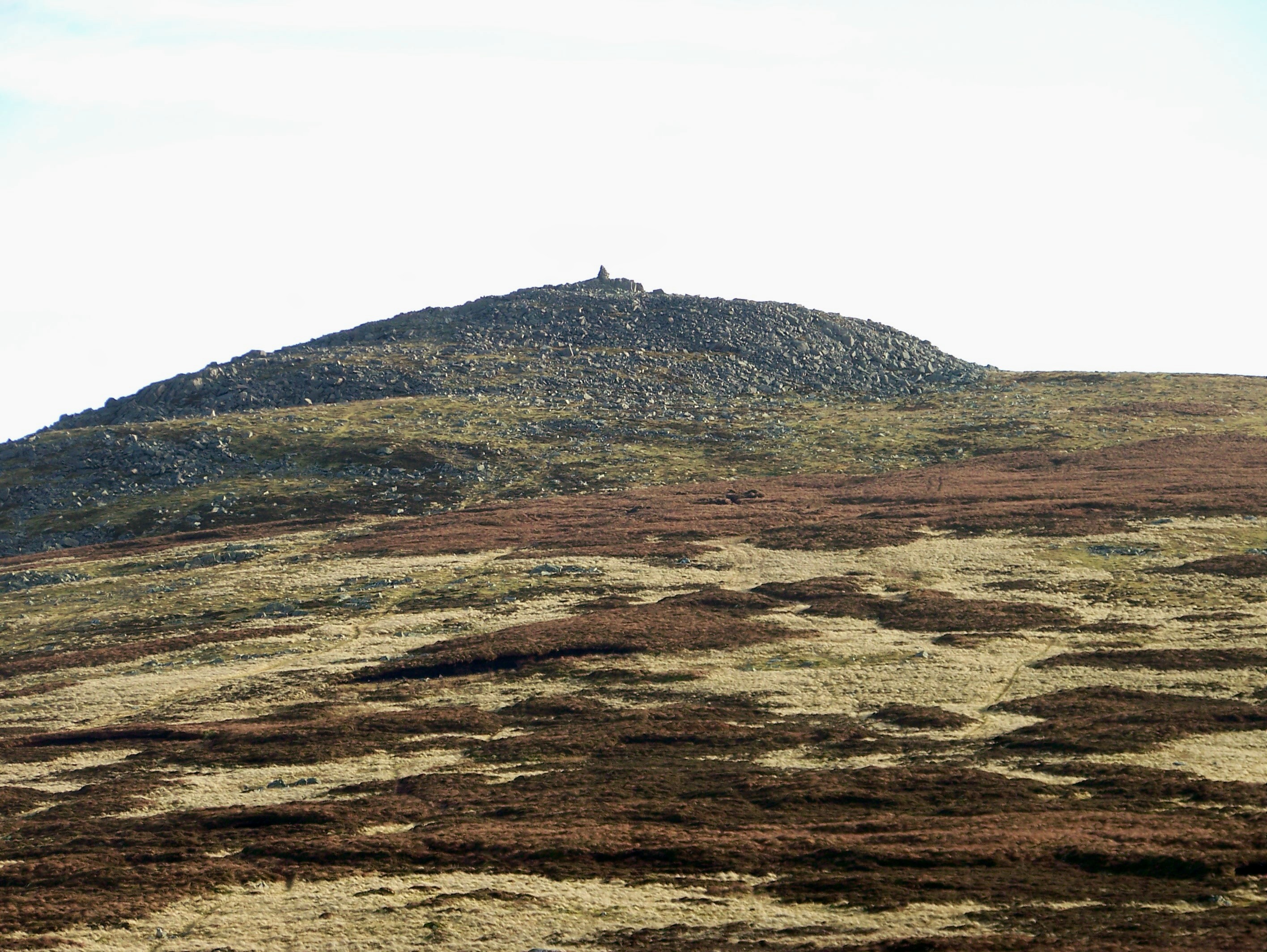
The summit of Carrock Fell. Apparently Charles Dickens climbed up here in 1857. Just thought I'd throw that in.
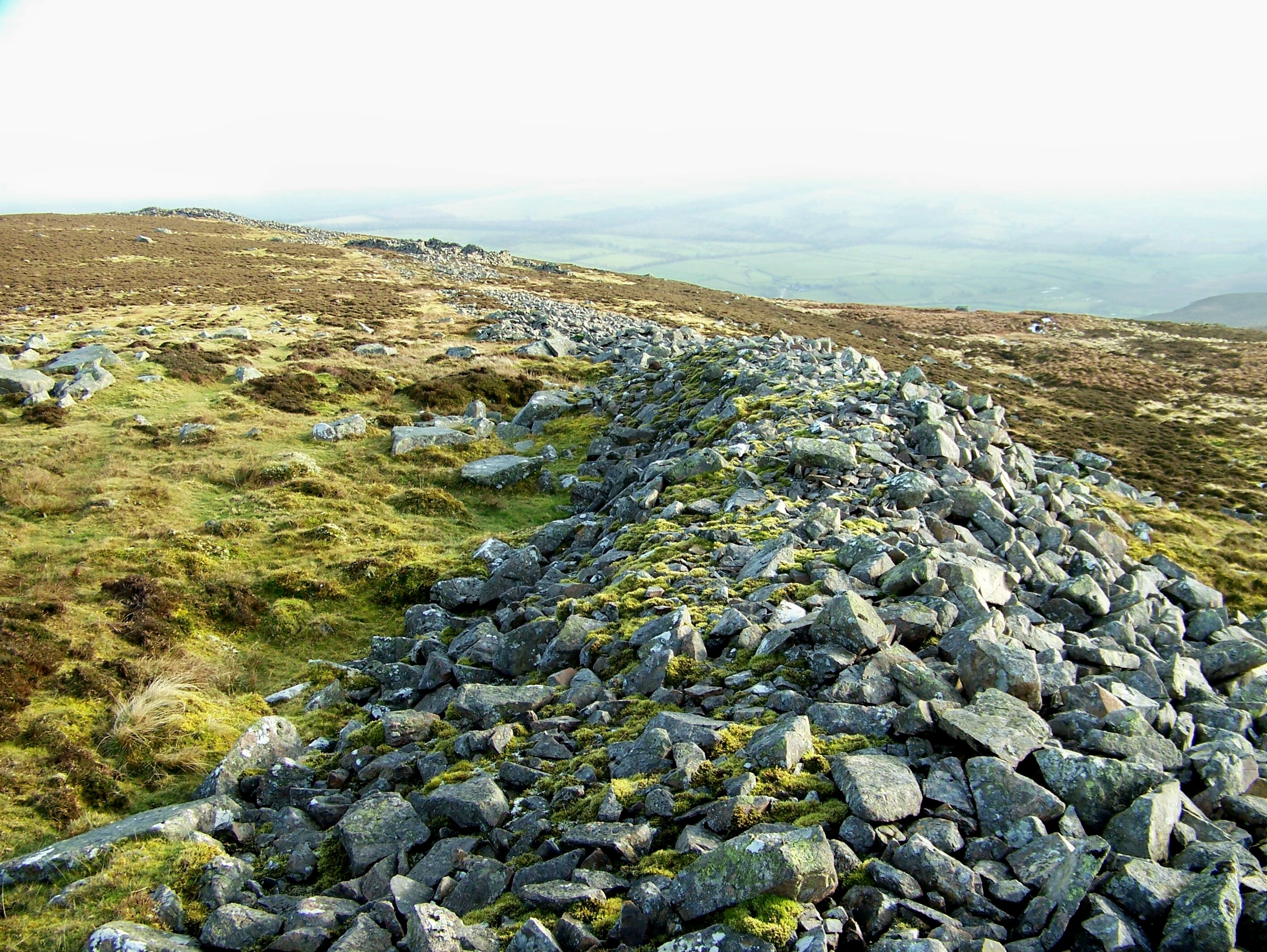
The walls of the Iron Age hill fort on Carrock Fell
From the mine, I steam straight up the gill to the ridge, and in just over an hour am on Carrock Fell, where the remains of an Iron Age hill fort encircle the summit.
The first and last time I climbed up here, which was May 1979, I didn’t take much notice of the ruined fort because, to be quite honest, there isn’t much to see. But today I skirt the perimeter wall and find a section of original stonework still in place. This fort was built by Britons, or Celts, as a defence against the Romans. But it was never completed because various conservation groups and socially-advantaged vocal types stepped in and blocked it. Just kidding. Sort of.

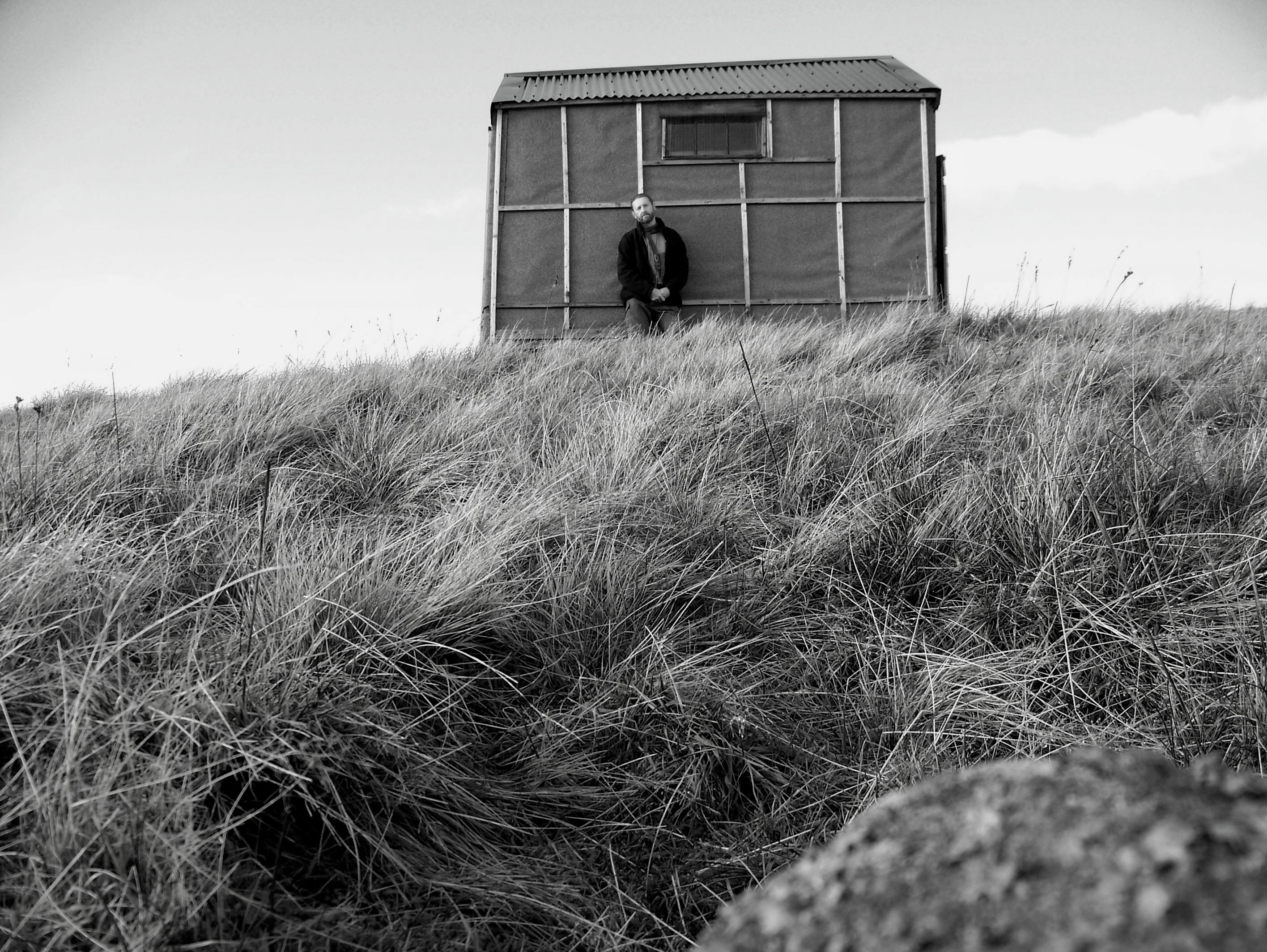 From Carrock Fell I follow grassy ridges to High Pike and Knott, pausing only for a flask of jasmine-flavoured green tea in the Lingy Hut before climbing into the mist. I reach the summit of Great Calva as the gloom begins to gather.
I make my descent along the line of a fence and hit the Skiddaw House track as darkness falls. I have my Petzl headlamp burning and visibility is good. It’s a pleasant plod back to the mine in the dark.
As I warm a pan of home-made red cabbage soup and sip a billy of tea, I reflect upon the generations of men who shaped this valley and these fells – from the industrious Iron Age stone-wallers to the miners who toiled beneath the ground.
Now there is a lifeless feel to the place. It has been sanitised from afar by people who have never had segs on their hands. History has been crushed beneath the blade of a bulldozer. A unique corner of Lakeland has been wiped off the map and replaced by a landscape that masquerades as natural but is nothing of the sort.
Thirty years on, that Kendal fella’s words ring hollow and prophetic: “Nowt for Carrock.”
- The historical details of Carrock Mine reproduced here have been largely gleaned from an account written by an old friend of mine, the late Dave Blundell, in Beneath the Lakeland Fells (Red Earth Publications, 1992). An abridged version can be viewed here.





Thanks for a very interesting post, I shall now make Carrock one of the hills I need to revisit. I always enjoy my days out if I know a bit more about the local history.
I worked at carrock as a driller many happy memories of the place. Worked with a great bunch of lads. Think I May have been the last miner to work there as all the other lads took redundancy payments and cleared off. Because I broke my service to work offshore I didnt qualify for such payments so I stuck it out till the bitter end. It was a crying shame to see it go. There was still a lot of high grade ore to be had.
Hi Alan. Thanks for that. Yes, it is a shame it’s gone. Force Crag too, I remember that working.
Cheers, Alen
We, my husband, our blue merle border collie went here today. Beautiful sunny day and wonderful and interesting walk. Our dog Megan’s favorite part , naturally was dipping in the beck and enjoying our packed lunch. Read your write up on our return. Very interesting and very amusing…Many thanks
Hi Jennifer. Glad you had a good day out. The weather has been wonderful – and that makes all the difference.
Cheers, Alen
HI Jennifer I worked there as a miner many years ago and I still like to go there to look at whats changed never get tired of going there.
I too remember the old days when mining provided jobs, My father worked at force crag just after the war. In the seventies i worked at threlkeld quarry, All is now sadly gone, nothing must disturb the silence !!
Hi Ron. Thanks for that. I remember Force Crag working back in the seventies and reopening briefly in the 1980s. There’s nothing left now in the Lakes except a few slate quarries. You’re right – nothing must disturb the silence.
Cheers, Alen
A very nostalgic read of real life in a harsh environment. I enjoyed it immensely.
Hi Alan. Thanks for that.
All the best, Alen
Hello –
This was a fascinating read. I was brought to the Lakes for an A Level Geology field-trip, back in about 1987, all the way from Cambridgeshire (there is no geology in Cambridgeshire…).
We stayed in a Youth Hostel somewhere near Carrock Fell, and one day walked through the site of the mine. We had been told all about the economic realities of mineral extraction, and the real meaning of the word ‘exhausted’, but the lessons were left hanging in the air somewhat (I think the lesson drawn by most of us was that the people in charge were evil capitalists… of course they are, but it’s more complicated than that).
At that time the mine buildings were intact, but no-one knew for how long the mine had been closed. I managed to get into one of the workshops, and was amazed that all the machinery was intact, and seemed merely to have been switched off at the end of a shift (when? 5 years previously?), with minerals left where they were on the grading tables, conveyor belts, whatever – a real Marie Celeste.
I went back there a few years ago, and of course it has all changed – gone. Now, thanks to the internet, I can fill in the blanks. Thanks again.
Thanks very much for that information. You have filled in some blanks for me, too. I never had the opportunity to visit the mine while it was working, and by the time I got around to taking a serious look at it the whole site had been flattened.
But things move on, I suppose. Mind you, the same thing happened to me at Haig Pit in Whitehaven. I actually had the chance to take a tour of the workings, three miles out under the Irish Sea, but couldn’t get a day off work. Next thing you know, the pit has gone – along with nearly ever other in the country.
Thanks for sending me your comment. All the best, Alen
I was in Swineside for 4 days recently during the appalling weather, but the landscape was stunning. I particularly liked the mine’s remains, my father was a Lancashire miner, and i tried to imagine the first miners walking the 2 miles from Mosedale in the pitch black morning and night in the winter – never seeing daylight till the weekend. Why do “views” have to take precedence over change which involves technology ? Unless we stop being so prissy about ‘visual amenity’ (whatever that might mean) we will not be able to sustain our lives with home-produced power and work provided by local employers. Thatcher had no concept of the value of community – folks working together for the common good – common good should include beautiful views, but views should not be the major consideration. – If there is ore still in Carruck is it feasible to get it out now ?
I will for sure return to this beautiful place and revisit the mine… it reminds us of where our ancestors toiled so hard for us.
Hi Collette. I can’t help but feel that the Lake District, despite its beauty, is being turned into a theme park or caricature of itself. The original vision of a national park that preserves the living and cultural environment has been lost and the emphasis now is, sadly, on tourism and recreation.
Thatcher still makes my blood boil all these years after she was turfed out of office by her own party. She did irreparable damage to this country, not only in the way she destroyed heavy industry, but in the mindset of greed she instilled in an entire generation and her complete lack of belief in the community. We are still suffering.
I often think about the miners walking to work when I visit places like Mosedale. They were hard times indeed, and poverty and poor health were rife, but I think it’s true to say that people’s values and morals were different in those days, and that they valued each other and their communities more.
Hope you return to Carrock soon. All the best, Alen
hi collette. I was lucky enough to have worked at carrock as a miner right up to the very end. I worked with a great bunch of fellas some of wich are sadly no longer with us. i spent part of my time there working a stope on the harding vein. This was probably the richest ever part of the mine. we were drilling a quartz vein about 7 foot wide. It was loaded with wolfram and sheelite. It was realy easy to drill like drilling butter my mate used to say old jim matty in the mill would allways say when are you going tp send us some more of that good muck spats. Allthough we extracted all of this lucrative ore out from above there is still lots of it left below. However this would be difficult to extract as it would involve the sinking of a shaft wich would be very costly also there would be a problem with all the water it would have to be constantly pumped out. So to answer your question collette yes there is a lot of ore left in there but it would probably be to costly to extract right now
It brings tears to my eyes when I think of such vandalism.
Hi Bernie. Yes, I totally agree. That’s what it is, sheer vandalism.
Regards, Alen
To see such an area of industrial heritage bulldozed to anomimity is heartbreaking. Many areas of the Lake District have been demolished by Philistines who have no emotional contact with the industrial history of the Lake District. It should’nt be allowed!
On the upside, I think a corner might have been turned because Force Crag Mine, which closed in the early 1990s, has been preserved in its entirety. Let’s hope so.
All the best, Alen